

Traversing Legends and Myths: A Trek Through the Mountain of Ashes
After we reached Kathmandu, the first sightseeing planned for us was a short trek on a hillock close to the guest house where we were staying. Yet when we discovered the place, we realised that it was not a short trek but, in fact, a climb through slippery pathways and uneven stone steps. We did not think that the quiet small region of Machhegaun, a suburb in Kathmandu, had a mountain that was approximately 2500 meters in height. It is known locally as Bhasmasura Danda, where ‘danda’ means ridge. The mountain is thought to be the third largest peak in Kathmandu. This is a popular trekking climb and takes around 5-6 hours to reach the pinnacle. The location, as per Google, is the southern rim of Kathmandu Valley, close to Machhegaun, Dakshinkali, and Pharping.
For us novices the path was indeed quite steep, and at certain parts we had to make our way through a slippery mud trail. It was also a distinct experience for us: the feel of fresh air, the surrounding rustle of leaves, the blowing wind alternating with our sweaty backs, reminding us in a way of the heaves and breath of the mountain. The pinnacle on a bright day, according to our guide, Sushil, offers a panoramic view of the Himalayas. This was something we could not do because, due to the rains, a large part of the climb through slick pathways, coated with moss and mud, and warm, wet vegetative leaves made us rethink going all the way up. Anyway, personally, I don’t think reaching the pinnacle was our goal. We wanted to enjoy the surroundings and feel the charm of the place. The surrounding area is forest land, and the noiseless calm of the place gripped us and provided us with an inner sense of peace. We could see the different shades of green, the chirps of birds around us, the damp air with a slight tinge of rain around it and, most importantly, the distant area filled with buildings and sheds and small patches of rice and corn fields.
The hill gained the name Bhasmasur (the asura in the story of Krishna after being vanquished, was burnt to ashes), as the remains of the demon were scattered over this hill. After about a quarter of the climb was done, we discovered the statue of Gautama Buddha, which was constructed about five decades ago with the help of the Thai administration. The golden colour of the statue glowed in the sunlight, and the prayer flags around reminded us of the five elements- Pruthvi, Ap, Agni, Vayu, and Akasha (earth, water, fire, air, and space) and our role within these elements. A little further up is the Shantiban Buddha Stupa entry gate. The main stupa is under construction.
Interestingly, in Karnataka’s Kolar district, there is a Kalabhairava temple atop a hillock called Seethi betta. Opposite this is another hillock named Bhasmasura betta, which is believed to be formed by the ashes of the Asura king. It is also believed that when it rains, the water does not flow down as it is absorbed by the ashes on the hillock.
Anyway, getting back to Kathmandu, the Bhasmasur hill has different trails. It is also a blend of Hinduism and Buddhism, as it is significant for the Champadevi temple as well as the Pharping monastery. There is an Asura cave where it is believed that Guru Padmasambhava meditated.
The view of Kathmandu from the hill is breathtaking and makes you aware of the juxtaposition of the calm and peace with the hustle and bustle of the city below. The forest area was lush and green due to the recent rainfall. Even if you do not trek to the top, the climb for even an hour or so energises you. Significantly for us, the climb reminded us that we had underestimated it, but we were also glad that, despite being seniors, we had managed at least 2/4 of the climb and were proud of our resilience and endurance.
PICTURES:
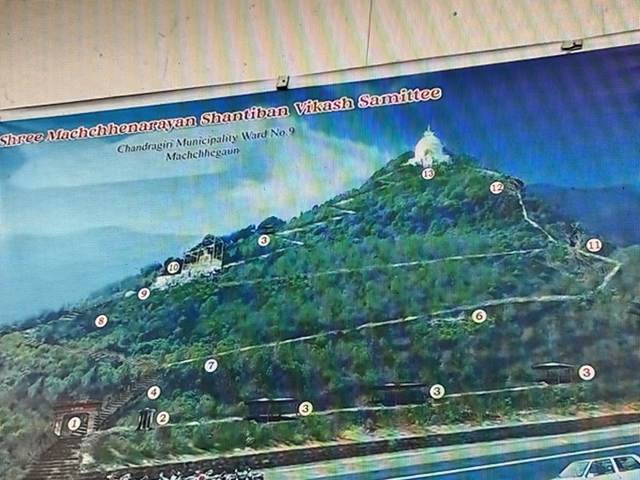
Route map to Shanti Stupa
The peace pagoda construction details
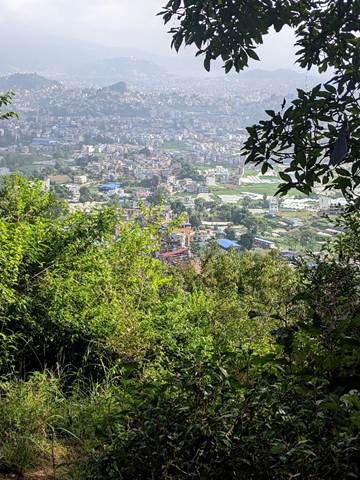
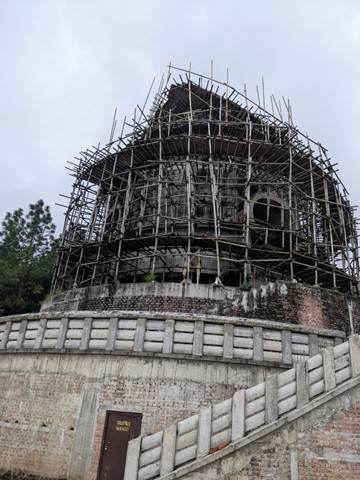
View of Kathmandu from the top Construction work of the Shanti Stupa
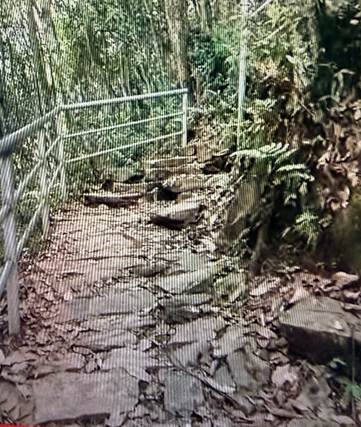
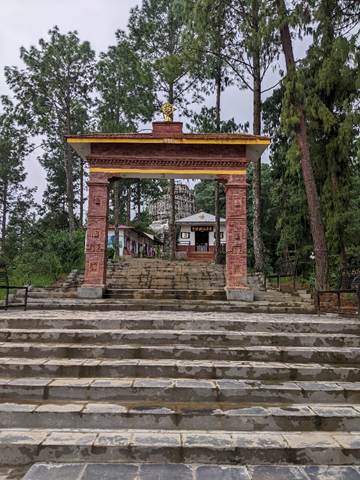
The trekking path Entry gate to Shanti Stupa
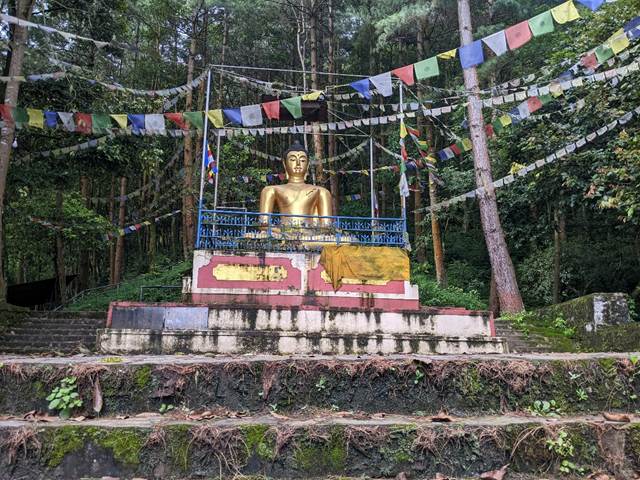
Gautam Buddha Statue with the prayer flags