

(https://x.com/cbic_india/status/1528946825612652545)
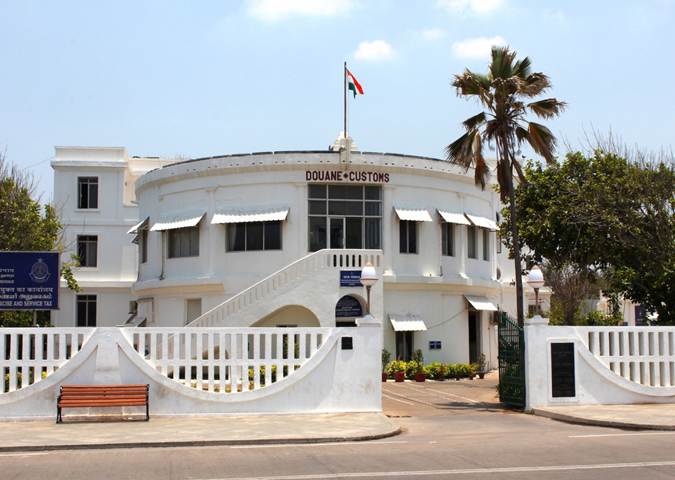
The Duanae House, or the Customs House in Pondicherry, is a significant reminder of the French colonial architecture. It features tall columns, intricately carved facades, and spacious halls. Built around 1872, the structure evokes Pondicherry’s rich maritime trade. The building once had a 10-metre mast with cannons to signify the supremacy of the French. Unfortunately, the mast collapsed in a storm in 1842. Later, in 1840, the architect built the upper floor with the same circular structure as the lower one.
In 1940, the building was redesigned in the Art Deco style. For those who are not aware, Art Deco is an architectural movement that began in France in the 1930s. As the website of the Architectural Digest states: “The [Art Deco] movement received global attention at the 1925 Exposition Internationale des Arts Décoratifs et Industriels Modernes in Paris, where designers such as Émile-Jacques Ruhlmann, Jean Dunand, and Pierre Chareau displayed their groundbreaking work. The design style is known for gleaming lacquered or veneered surfaces, geometric forms, and far-flung influences from Egypt to antiquity.” The present building is now under the Indian government and serves as the GST Centre for Pondicherry.
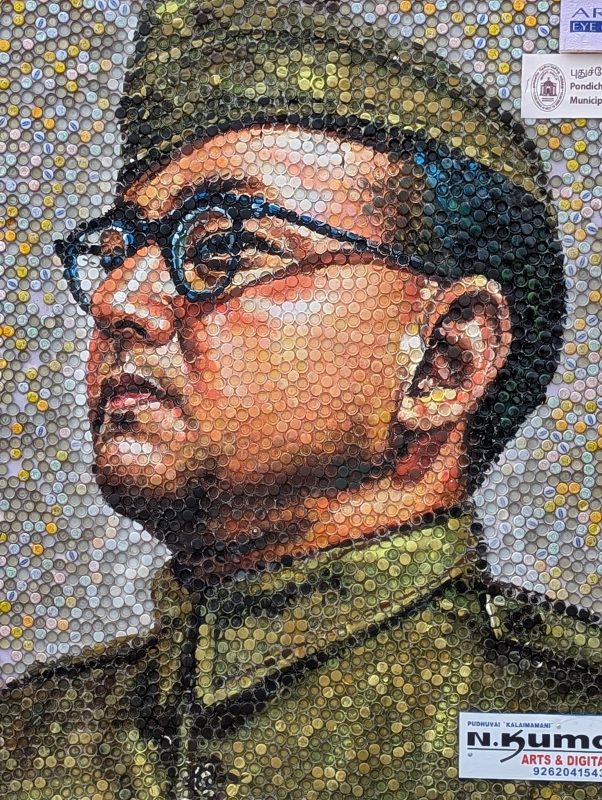
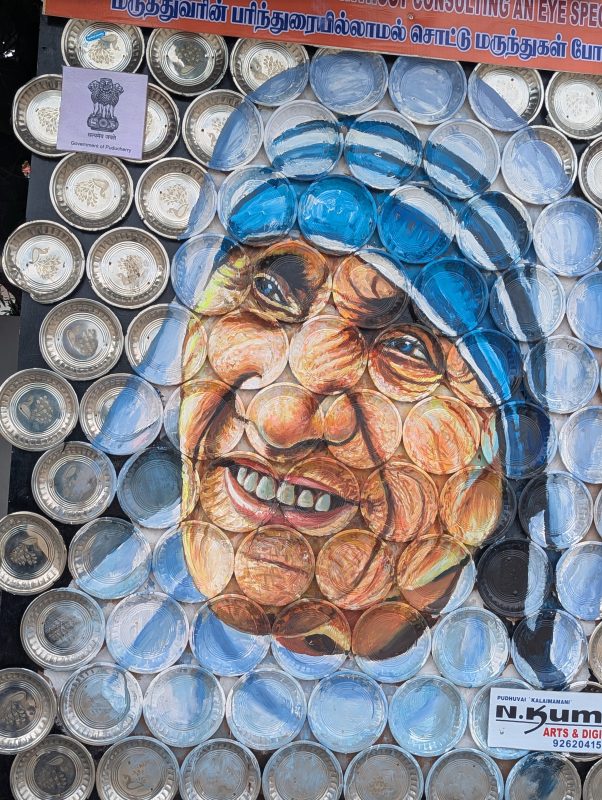
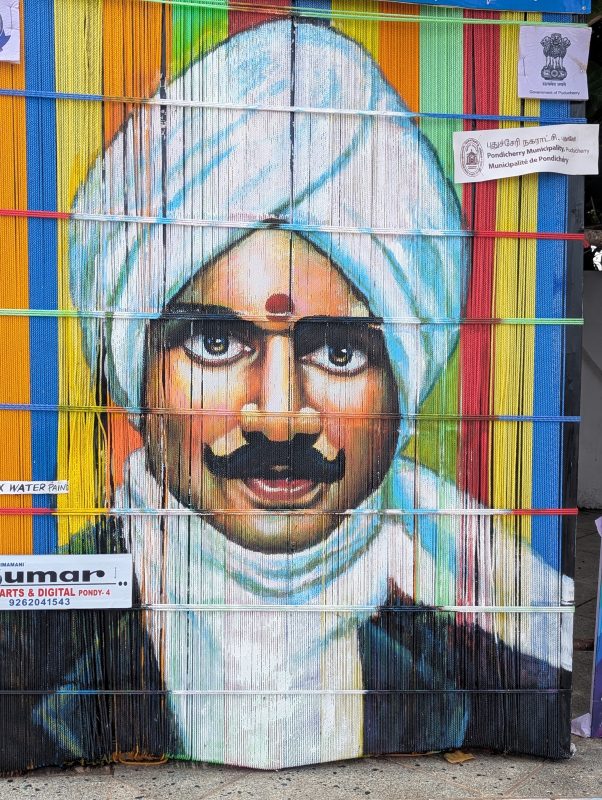
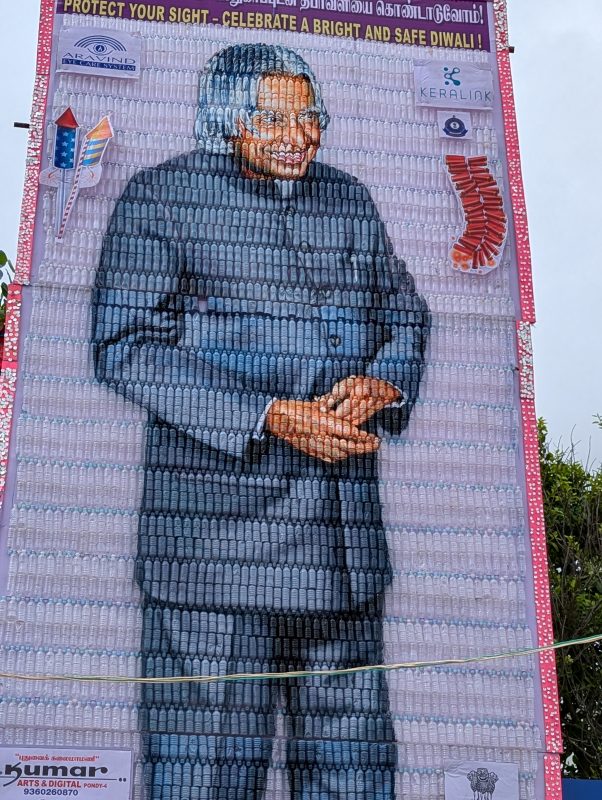
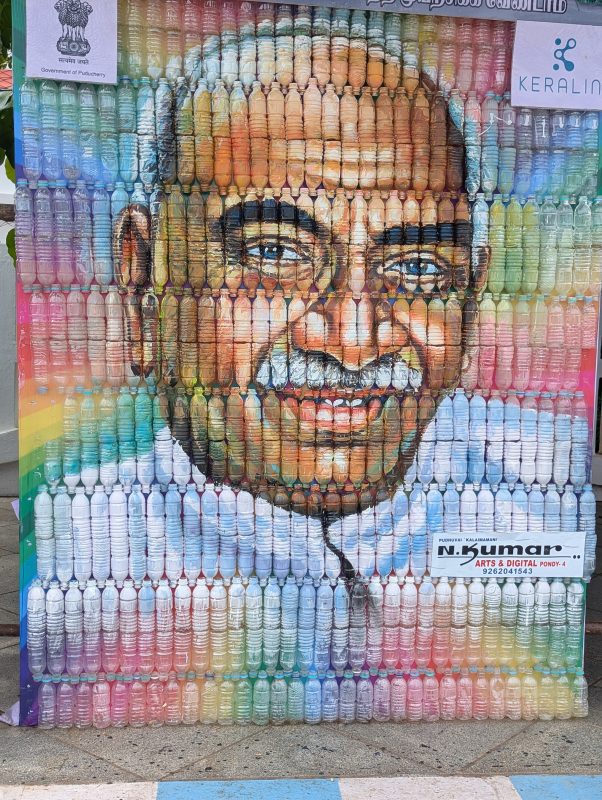
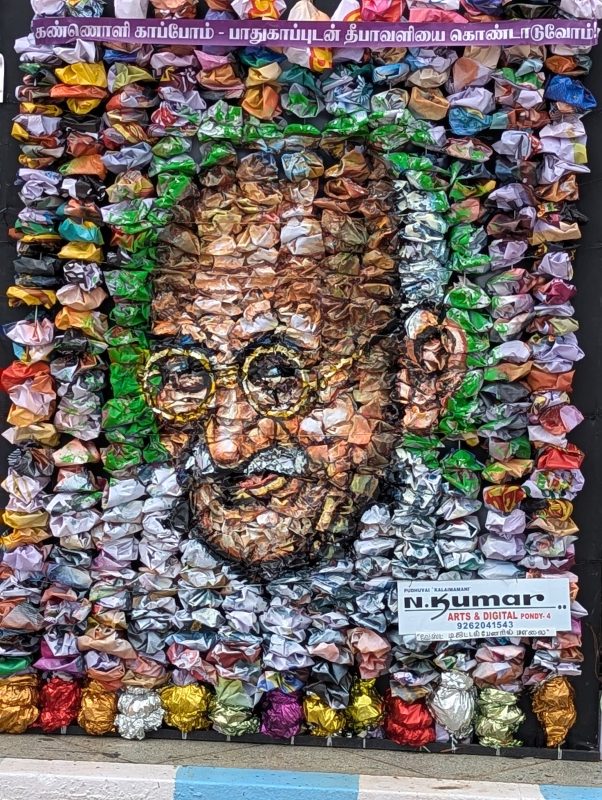
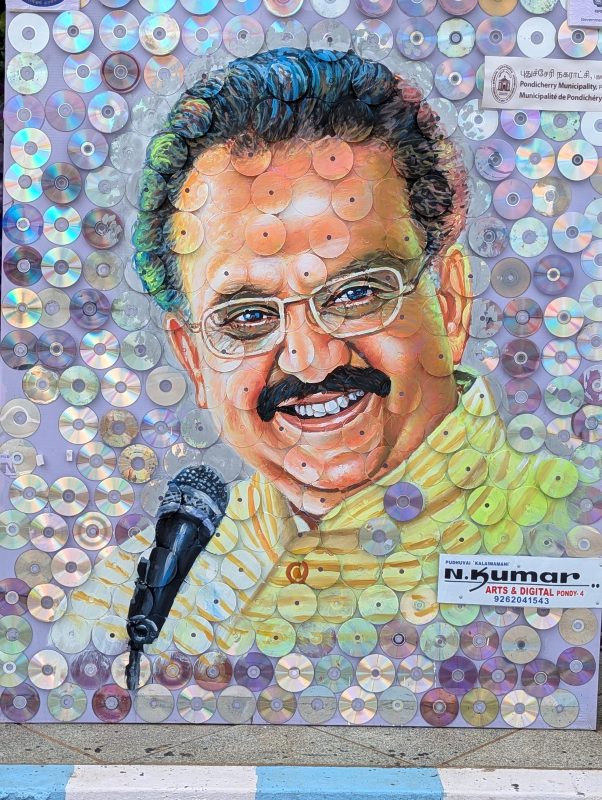
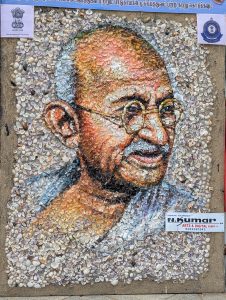
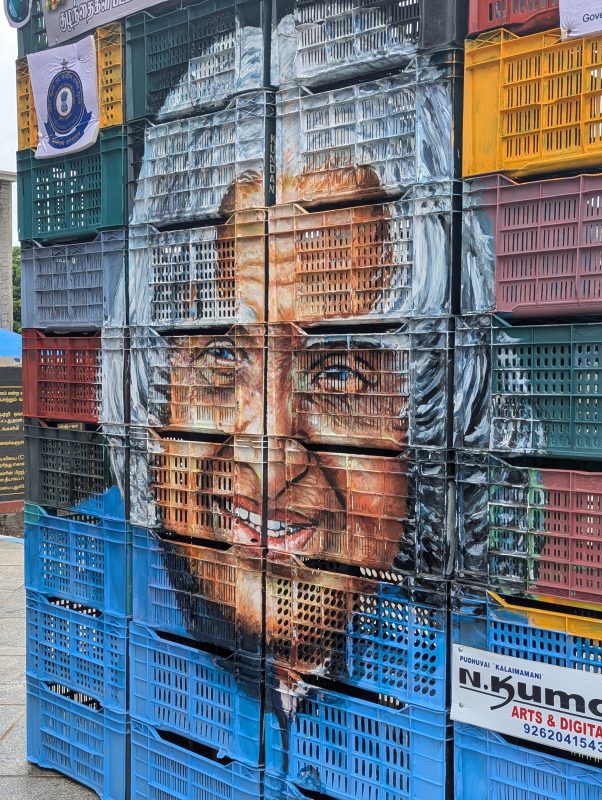
Interestingly, this Deepavali, the road right in front of it was decorated with images of important Indian leaders, created using various kinds of rubble and everyday items. One installation that excited many was made using used plastic bottles. I am sure you too will marvel once you see the pictures. However, what was striking was that, except for Mother Teresa, there were no women at all. It looked as if Indian women had not been part of Indian history.
Interestingly, the side wall of the platforms at the Gandhi Thidal feature images of various women, although in my opinion, the drawings could have been better.
Well, one knows that art is a kind of expression, and when located in popular public spaces, it becomes a way of communicating social, political, and cultural values. The way I saw the images right in front of the Customs House was, in some way, a retrieval of public space usurped by the colonial, as well as the artist’s attempt to educate people about men who had probably shaped the country in a masculine way.
Anyway, these are my personal reflections. Do enjoy the art.